Is Etsy a Legit Website? Buyer Protections Explained
Is Etsy a legit website? Yes, but shop quality varies. Check seller signals, spot common scams, and know what to do if a purchase goes wrong.

In short
Etsy is a legitimate online marketplace where independent shops sell handmade, vintage, and other goods, but each seller runs their own shop. Check a seller’s reviews, sales history, listing details, and policies, and pay through Etsy’s checkout to keep eligible orders within its buyer protections. In practice, Etsy can be a safe place to shop when you vet each seller and treat unusually low prices or requests to pay elsewhere as warning signs.
Think of Etsy as a craft fair that never closes, with thousands of independent sellers running their own booths. That variety is the appeal, but it also leaves first-time buyers wondering if the place is on the level.
The short answer is yes, Etsy is a legitimate website. The marketplace has real protections in place, but individual shops vary, so you’ll want to know what to check before you buy.
Here, we’ll cover how those protections work, the scams that show up most often, why some prices look too good to be true, and a simple checklist for vetting any shop.
Is Etsy a Legit Website and Safe?
Short answer: yes, Etsy is a legitimate site. The catch is that the platform and the shop you buy from aren’t the same thing.
Etsy is legit, though scams still happen
Etsy is a legitimate, generally safe marketplace. Most sellers are trustworthy, and scams still happen, the same way they do on other marketplaces. The risk sits in the shop, not the site.
What kind of marketplace Etsy is
According to Do You Etsy?, Etsy is a global marketplace for handmade and vintage goods, and each shop sets its own policies. It’s home to millions of independent sellers.
The buying experience varies by shop. Consider a first-time buyer shopping for a leather wallet as a gift. Shop A has plenty of reviews and a clear return policy. Shop B has none and a one-line policy.
Same site, very different odds, and checking both before she pays makes the difference.
Is Etsy the same as Shein? They aren’t the same site. Each Etsy listing comes from an independent shop with its own policies, so you’re judging the seller, not just the platform.
Why are people leaving Etsy? That same variation is a good place to start. One rough order can sour a buyer on the whole site, even when most shops are fine.
Real stories from people who got scammed
Here are the patterns to watch for:
- Life savings lost to fake support. Some buyers have lost their life savings to someone posing as support.
- Item never arrived. The buyer pays, and nothing shows up.
- Dropshipping necklace bait-and-switch. Dropshipping means a shop lists items it never holds and has a supplier ship them direct. In a bait-and-switch, the photos show one necklace and a different one arrives.
Spotting the pattern early is your best defense.
Built-in Ways Etsy Protects Buyers
Etsy has several safeguards built into checkout and your account. Here’s how they work, from payment to problem.
Is paying by card safe on Etsy?
Is it safe to use your credit card on Etsy? For most buyers, yes, as long as you pay through Etsy’s checkout. These protections back that up:
- Encrypted transactions. Your card details are scrambled during payment, so outsiders can’t easily read them.
- Multiple payment methods. You can choose from more than one way to pay.
- Funds held until order confirmed. Your payment waits until the order is confirmed, rather than going straight to the seller.
- Built-in fraud detection. Etsy watches payments for signs of trouble, which we’ll cover below.
The real question is where you pay, not just how.
What Etsy Purchase Protection covers
Purchase Protection is Etsy’s refund program for buyers. Etsy’s Help Center is clear that it applies only to purchases paid for through Etsy’s platform. It covers missing or not-as-described items with a full refund for qualifying orders.
Picture a first-time buyer whose handmade quilt never arrives. She contacts the seller first, then opens a case with Etsy if needed. Because she paid through Etsy, she’s covered.
Items that match their listing accurately aren’t refunded under this protection, so read listings carefully before you buy. The card safety points above apply here too.
Settings that keep your account secure
Your account is another door into your purchases, so three settings are worth checking:
- Two-factor authentication. It adds a second step when you sign in, so a stolen password alone isn’t enough.
- Sign-in notifications. You’re alerted to new sign-ins, so you can act fast if it wasn’t you.
- Sign-in history. A list of recent sign-ins helps you spot anything you don’t recognize.
Small settings, big peace of mind.

How Etsy catches fraud and handles reports
Etsy also keeps an eye out from its side, and you can flag trouble too.
- Automated monitoring. Etsy’s systems look for suspicious patterns, so unusual activity can be flagged.
- Report item or shop. If a listing or seller looks wrong, you can report the item or shop yourself.
- Etsy rules for sellers. Sellers are expected to follow Etsy’s rules, and those rules are the yardstick for any report.
Reporting is quick, and it helps the next buyer too.
Scams You’ll Run into on Etsy
Most Etsy scams repeat a few familiar tricks, so knowing them makes you harder to fool. Here’s what we’d watch for.
Items that are fake, inferior or misdescribed
Watch for mass-produced goods sold as handmade. Some are dropshipped from AliExpress, where a supplier ships the item straight to you. Others post stolen product images, and sometimes the wrong or inferior item simply arrives.
Consider a first-time buyer ordering a handmade ceramic mug for her sister. The mug that shows up is thin and nothing like the photo. Checking where an item is made beats trusting what the photo shows.
Fake shops that vanish after you buy
A fake shop can look polished, with a logo and a few glowing reviews, then vanish once the payment clears. Even if something arrives, the shop may have collected your personal data, which can be exposed later.
So why is Etsy stuff so cheap? Some prices are honest: mass-produced and dropshipped goods can sell low because the seller never made or handled them.
The red flag is a too-good-to-be-true price, where an item sells for far less than every other shop charges.
Shipping and pricing tricks sellers use
Watch for these four:
- Wrong-address shipping. The item goes to an address other than yours, so it never reaches you.
- Fake tracking numbers. The code isn’t tied to a real shipment, so updates never arrive.
- Same item, different prices. One product appears in several shops at very different prices, so compare before you buy.
- Out-of-stock redirect. A listing says sold out, then sends you to a pricier version.
Sellers who ask you to pay elsewhere
Asking you to pay elsewhere is one of the biggest red flags. A seller may ask you to pay through Venmo, PayPal, cryptocurrency (digital money), or gift cards instead of Etsy’s checkout.
The excuse is often a fake technical issue, like ‘checkout is broken, so just send it to me.’ Others offer discounts to avoid fees, which move your money off the platform.
Paying inside Etsy is the safe route, and paying outside it is where the risk lives. Pay outside and you lose Etsy protection, with nothing to fall back on if the item never arrives. Stay on the platform.
Phishing emails and links posing as Etsy
Phishing is a fake message built to trick you into giving up a password or clicking something harmful. Scammers often impersonate Etsy support.
They also use lookalike domains and emails, where one letter in a web address (a domain) or sender address is swapped so it passes a quick glance.
Some build spoofed Etsy websites that copy the real login page, and others hide malware-laden external links that install malware (harmful software) on your computer.
Don’t log in through a link in an email. Open a fresh browser tab and go to the site yourself. When in doubt, don’t click.
How scammers hijack accounts and payments
Using phishing and malware, scammers go after both sides of a sale. Buyers risk having their card data exposed through a fake checkout page or an infected device. Sellers risk having their payments redirected to a bank account the scammer controls.
Think of a small candle maker who clicks a link in an email asking her to verify her account. Soon after, her login stops working and her sales money goes somewhere she doesn’t recognize.
Going to the site herself could have stopped it. One click was all it took.
Spotting a Legit Seller or Shop
Etsy sellers range from a hobbyist potter to a reseller who never touched the product. Here’s how we’d tell them apart.
Check a shop’s profile and sales history
To find sellers, type a product or shop name into Etsy’s search bar, then open the shop. Check its sales history and profile for a clear photo, a real about section, and filled-in shop policies.
You want evidence of a business, not just a polished front page.
A first-time buyer shopping for her mom’s birthday finds a shop that opened last week with zero sales, so she tries one small item first. Small steps protect your wallet.
Before your first purchase, run this checklist:
- The profile has a real photo and clear shop details
- Listings have no sloppy spelling or grammar
- Sales and reviews match what the shop claims

Reading reviews without getting fooled
Read the pattern in negative reviews, not the star rating. Several buyers griping about late orders tell you more than a single angry review. Be wary of generic five-star reviews like “Great shop!” that never mention the item.
Finally, search the shop name plus “scam” in Google. Unhappy buyers post online too, so read carefully, but the same complaint across several sites is a clear warning.
Checking photos and prices for red flags
Run a reverse image search with a tool like Google Lens. If the same photo appears on other shops or stock sites, the seller may be passing off someone else’s work.
Next, paste a distinctive description sentence into Google inside quotation marks, since identical wording across shops often means copy-paste resale.
Watch for unrealistically low prices, which often signal knockoffs or scams.
Handmade shops show their workspace, the making process, and several angles of each piece. Resold shops repeat stock shots with no story about who made the item. Judge who made it over how pretty the shop looks.
Red flags in shipping, replies and requests
Picture a church secretary ordering custom name tags. Three weeks pass with no tracking update and only vague replies, so she moves on to a shop that actually answers.
- Long delivery times: Estimates stretching for weeks are a warning.
- High shipping costs: Shipping that costs more than the item itself deserves a close look.
- Slow or evasive replies: A seller who dodges questions about sizes or returns is a problem before you’ve paid.
- Requests for personal information: Asking for a bank login, Social Security number, or payment by gift card is a major red flag.
Confirming a message really came from Etsy
The real question isn’t whether an email looks official. It’s whether the message is actually in your account.
- “From Etsy” badge: Look for it, but don’t rely on it alone.
- Messages tab copy: Log in directly and check your Messages tab for the same notice.
- Forward spoofs: Send a suspicious email to spoof@etsy.com.
- Check etsy.com URL: Before typing your password, make sure the address reads etsy.com exactly, since lookalikes swap letters.
Habits That Keep You Safe on Etsy
Staying safe on Etsy comes down to three habits: protecting your login, paying the right way, and adding a few helpful tools.
Lock down your login and passwords
Picture a retired teacher reusing her email password on a new Etsy shop. A unique password keeps one breach from exposing both accounts.
- Strong, unique password. Make it long and random, and never reuse it.
- Enable two-factor authentication (2FA). It adds a second check, like a code sent to your phone, so a stolen password alone isn’t enough.
- Use a password manager. It stores strong passwords so you only have to remember one.
Safe ways to pay and message sellers
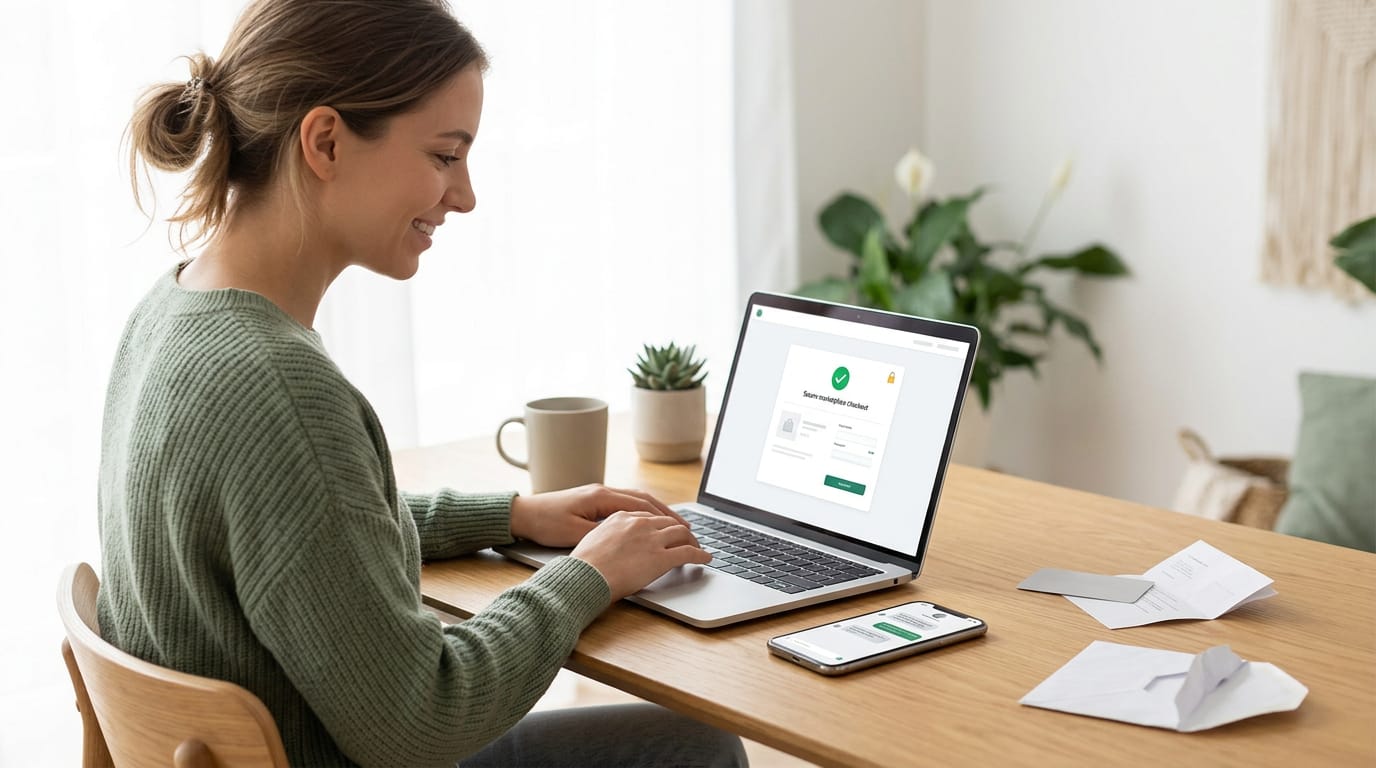
A seller asks a first-time buyer to pay through a direct-message link. Stick with Etsy’s checkout so every order and message stays on record. Good sellers won’t mind.
- Pay only on Etsy. Skip wire transfers, gift cards, and outside payment links.
- Stay within Etsy messaging. Keep conversations inside Etsy, not outside on email or text.
- Check terms and return policies. Read them before you buy, so there are no surprises.
- Monitor your card statements. Flag any charge you don’t recognize right away.
Helpful security tools worth adding
These work best alongside the habits above, not instead of them.
- Virtual private network (VPN) on public Wi-Fi. It scrambles your data when you’re on coffee shop or airport networks.
- Artificial intelligence (AI) scam detection. Some tools use it to flag suspicious sites or messages. Treat those alerts as a second opinion.
- Browser protection extension. This small add-on warns you about fake or unsafe sites.
- Identity theft protection. Often a paid add-on, it watches your personal information for misuse, so weigh the cost against your needs.
Steps to Take If You’re Scammed
If a purchase went wrong, you have three jobs: get your money back, protect your accounts, and report the shop. Start with the seller and work through the rest.
Getting your money back after a scam
- Contact the seller first. Send them a message explaining the problem.
- Screenshot everything before you dispute. Save messages, receipts, and the listing page.
- Open an Etsy case after 48 hours if the problem isn’t fixed.
- File a card chargeback, which asks your card company to reverse the charge.
For example, a first-time buyer orders a candle set that never arrives. They message the shop, screenshot the order and chat, then open a case after 48 hours. That paper trail gives them proof when they ask for their money back.
Protecting your identity and accounts
If a scammer got hold of your Etsy login, bank details, or personal information, you’re now dealing with a second problem on top of the first. Lock things down now.
- Change your Etsy password. Pick a new one you don’t use anywhere else.
- Freeze your credit. A credit freeze stops anyone from opening new accounts in your name until you lift it.
- Monitor your statements. Check every charge, especially any you don’t recognize.
Who to report a scam to
- Etsy: Report the shop through Etsy so the platform knows what happened.
- Federal Trade Commission (FTC): Report the scam to the FTC, the U.S. consumer protection agency.
- IdentityTheft.gov: Use it for identity theft, when someone used your personal information to open accounts or make purchases in your name.
Selling on Etsy and Handling Returns
Before you buy or sell, it helps to know who’s protecting the sale and who sets the rules.
What protection sellers get on Etsy
Is Etsy safe to sell on? Etsy runs a protection program for eligible orders, but it’s a safety net with conditions, not a blanket guarantee. The one to know is Seller Purchase Protection.
According to Etsy’s house rules, Etsy may refund buyers up to $250, including shipping and taxes, when an order meets all its requirements, and sellers aren’t held responsible in those cases.
Two conditions matter most:
- Etsy Payments. The order has to be paid through Etsy Payments.
- Tracking. The seller has to provide tracking for the order.
Picture a candle maker whose eligible order was paid through Etsy Payments and shipped with tracking. If the order meets Etsy’s requirements, the maker isn’t held responsible in that case. Check the conditions first.
Sellers set the return and refund rules
Sellers set their own return policies, and that’s the first place to look. Etsy doesn’t put a refund obligation on sellers by default, so the shop’s policy is usually the rule you’re working with.
Think of a shopper in the European Union buying a scarf from a shop whose policy offers no refunds.
The European Commission describes a right to cancel and return online orders within 14 days without any justification, and that right may still apply even when the shop’s own policy doesn’t offer refunds.
That protection comes from the European Union’s Consumer Rights Directive, which makes it a legal right rather than a favor the seller chooses to grant.
Read the policy first.
Etsy is a legitimate marketplace, and for most first-time buyers it’s a good place to find handmade and vintage goods. The protections are real, the common scams are recognizable, and a few steady habits go a long way.
The one thing to remember is that Etsy has its own safeguards, but you’re the one vetting each shop. Take a few minutes to check the seller, keep your payments on the platform, and trust your gut when a deal feels off.
Shop with your eyes open, and Etsy can be one of the best places online to find something truly one of a kind.
References
- Protecting you when buying online — commission.europa.eu (2026)
- Do You Etsy? — digitalcommons.uri.edu (2014)
- Purchase Protection Program for Sellers - Our House Rules — etsy.com
- Etsy’s Purchase Protection Program — help.etsy.com
Questions
How to sell online products on Etsy?
To sell products on Etsy, create an account, open a shop, and add listings with clear photos, descriptions, prices, and shipping details. Etsy is geared toward handmade, vintage, and craft-supply goods, and you set your shop policies, including returns. Follow Etsy’s seller rules and use Etsy Payments and tracking to help qualify for Seller Purchase Protection.
How to search for sellers on Etsy?
Type a product or shop name into Etsy’s search bar, then open a seller’s shop page. Review its sales history, profile, policies, and reviews, and look for clear details about who makes or supplies the products.
Why are people leaving Etsy?
Some people leave after a poor experience, such as an order that never arrives, an item that differs from its listing, or difficulty finding reliable sellers. Because independent shops vary, one bad order can affect a buyer’s view of the whole marketplace.
Why is stuff on Etsy so cheap?
Some Etsy items are inexpensive because they are mass-produced or dropshipped, meaning the seller may not make or handle the item. Compare prices across shops, since a price far below similar listings can be a warning sign of a scam or misrepresented product.
Is Etsy the same as Shein?
No. Etsy is a marketplace of independent shops, while Shein is a separate retailer; Etsy listings come from individual sellers with their own policies. Etsy is especially associated with handmade and vintage goods, though not every listing is necessarily handmade.
Is it safe to use my credit card on Etsy?
For most buyers, using a credit card is safe when paying through Etsy checkout, which encrypts transactions and provides built-in fraud monitoring. Paying outside Etsy can remove platform protections, so avoid requests to use external links, gift cards, or other off-platform methods.
Is Etsy a trustworthy site to buy from?
Yes, Etsy is a legitimate marketplace, and most sellers are trustworthy, but individual shops vary and scams do occur. Check a shop’s reviews, sales history, policies, and listings, and pay through Etsy checkout to retain eligible buyer protections.
Sources
- Purchase Protection Program for Sellers - Our House Rules | Etsy, etsy.com
- Etsy's Purchase Protection Program – Etsy Help, help.etsy.com
- Protecting you when buying online - European Commission, commission.europa.eu,
- Do You Etsy?, digitalcommons.uri.edu,