Email Endings Explained: Closings, Sign-offs and Signatures
Email endings shape the tone readers remember. Choose a fitting closing line, sign-off, and signature with a quick shortcut for any situation.
In short
An email ending is the final closing sentence, sign-off and signature block that tell readers what happens next and leave a lasting impression. End with one clear, specific next step, choose a sign-off that fits your relationship and the email’s purpose, and include the contact details readers need. A simple, courteous ending helps your message feel complete, keeps expectations clear and makes it easier for people to respond.
Think of an email ending like a goodbye at the front door. A warm word makes the whole visit feel worth it, while a rushed wave is what people remember. Your email ending, meaning the closing line, sign-off and signature block, works the same way.
It’s the last thing your reader sees, so it sets the tone for everything above it.
You don’t need to be a writing expert to get it right. Here, we’ll cover closing lines, sign-offs, signature blocks, and examples for every situation, plus a quick shortcut for choosing fast.
Why Email Endings Matter and Their Parts
Your ending is what your reader carries out of the email. Here’s what it does and what goes into it.
What your ending tells the reader
Your closing leaves a final impression on the reader. A warm, clear ending makes the message feel finished. It also clarifies your message and purpose, and it sets expectations about what happens next.
Over time, those small details build the relationship. Think of a wedding photographer emailing a couple after their shoot. Her closing line, “You’ll have your gallery by Friday,” tells them what to expect, so they stop wondering and start trusting her.
It’s less about whether you close and more about what your reader knows when they finish.
What makes up a closing
A closing has three parts:
- Closing sentence. The line that wraps up your message, like “Let me know if you have questions.”
- Sign-off, or complimentary close. The short phrase before your name, like “Best.”
- Signature block. Your name and contact details at the bottom.
Writers mix these labels up, so you’ll see “sign-off” and “complimentary close” used for the same line. Don’t get stuck on the names. What matters is that each piece shows up.
Must-have elements to include every time
These five belong in every ending:
- Call to action. Tell the reader the next step, like “Reply by Tuesday to confirm.”
- Closing phrase. The polite line before your name, like “Thanks again.”
- Full name. Your first and last name, so there’s no guessing who wrote.
- Title and company. Your role and business. A bakery owner adds “Owner, Harbor Street Bakery” so the supplier knows she can approve orders.
- Contact information. Your phone number or website, so the reader doesn’t have to dig.
Miss one, and your reader has to hunt.
What Makes a Good Formal Email Closing?
A formal email’s closing, the final lines before your sign-off, has one main job: telling the reader what happens next. Get that right and the rest of the email tends to fall into place.
Spell out the next step plainly
Start by restating your purpose in a sentence, so the reader remembers why the email landed in their inbox. Then state the action you need and the deadline, the date or time it’s due.
Keep courtesy separate from instructions: “Thank you for your time” gets its own line, not a clause buried in the request.
Avoid vague demands. “Let me know when you can” leaves the reader guessing, while a specific ask gives them something to act on. Vague gets ignored.
Consider a freelance designer who writes, “Please approve the attached files by Friday at noon so the print run can start Monday.” The client gets a task, a time, and a reason, and the project stays on schedule.

Closing lines you can borrow
Here are four closings that suit most formal emails:
- “Looking forward to hearing from you.”
- “Please let us know if any questions come up.”
- “Please review the attached materials and let us know your thoughts.”
- “We’ll be in touch about the next steps in the interview process.”
So what is a good conclusion for a formal email? It’s a short line that thanks the reader, points to what happens next, and leaves the door open for questions. Pick the one that fits the email’s job, not the one that sounds most impressive.
A request needs a close that points to the deadline, while a status update can simply invite questions. Short beats clever.
Professional Sign-offs to Choose From
Your sign-off sets the tone for the whole email, so choose it on purpose. Here’s how the main options sort by tone.
Everyday sign-offs for most emails
Most emails need a plain, polite close:
- Best: the all-purpose option.
- Best regards: a touch more formal.
- Regards: brief and neutral.
- Sincerely: formal and dependable.
- Thank you / Thanks: when someone has just helped you.
- All the best: friendly without being personal.
- Respectfully: formal, for senior contacts or sensitive requests.
Pick one safe default. Choose one close, such as “Best”, and make it a habit rather than a decision. A bakery owner emailing her flour supplier each week never has to wonder which close fits.
Traditional closes and British conventions
Formal letters lean on a complimentary close, the phrase that sits above your name. “Yours sincerely” pairs with a greeting that uses the reader’s name, while “Yours faithfully” pairs with “Dear Sir or Madam.”
“Cordially” suits semi-formal emails, and “Respectfully” sits at the top of the formal scale. British-style conventions follow the same sincerely and faithfully rule, and everyday closes tend to be briefer. Pair them correctly, and you’re set.
Warm sign-offs that show appreciation
Warmer closes suit someone who went out of their way for you:
- Many thanks: a step up from “Thanks.”
- With appreciation: heartfelt for a client who trusted you with a project.
- Warm regards: friendly and professional at once.
- Take care: casual, best for people you know well.
A wedding photographer sending final gallery links to a couple she’s worked with for a year can close with “With appreciation.” It turns a delivery email into a thank-you, and the couple feels looked after.
How does Gen Z end emails?
Gen Z writers often keep closes short and playful, so the email reads more like a conversation than a letter. You’ll see “Cheers,” “Talk soon,” or “See you then” a lot. Playful closes often appear in an email thread, where each reply builds on the one before.
- “Cheers” and “Talk soon”: quick and friendly among peers.
- “See you then”: ideal when a meeting is already on the calendar.
- Creative phrases like “Onward”: fun, but risky with new contacts.
- Use only with familiar contacts: the rule that matters most.
Match the close to the relationship, not the generation. When in doubt, go one step more formal.
Picking the Right Tone and Formality
The right tone depends on the person reading and the subject at hand. It’s less about how polished you sound and more about who you’re writing to.
Fit your closing to the reader
Picture a wedding photographer emailing a venue coordinator she’s never met. A quick look at past messages shows how that coordinator writes, so she can match it from her very first note.
- Research the recipient. Check their past emails and signature before you pick your sign-off.
- Follow established formality. If your team writes “Hi,” don’t suddenly switch to “Dear.”
- Match subject sensitivity. A late invoice needs a more careful close than a thank-you note.
- Pair greeting with closing. “Dear Ms. Lopez” goes with “Kind regards,” while “Hi Sam” goes with “Thanks.”
A salutation is the greeting at the top of the email. Good ones include:
- “Hi [first name],” for people you know
- “Dear [title and last name],” for first contact or formal requests
- “Hello team,” for a group

Stay formal without sounding stiff
Take a bakery owner asking a flour supplier to move a delivery. “Per our earlier email, the delivery must arrive by Tuesday” reads stiff, while “Would Tuesday morning work for the flour delivery?” is warm and just as clear.
- Formal yet conversational. Contractions and short sentences keep you professional without sounding like a legal notice.
- Confident but humble. Say what you need, then leave room for the reader: “We’d appreciate your thoughts” beats “You must respond by Friday.”
- Avoid demanding or assumptive tone. Skip “Just checking in again” or “As you already know,” which can read as a jab.
Clear beats stiff every time.
Sign-offs for Each Situation
Your closing line (the sentence before your name) should fit the moment and the relationship.
Closing job search and interview emails
Consider a freelance designer who has just wrapped a phone screen. Her follow-up ends with a line that matches the stage:
- After phone screening: “Thanks again for the call. Looking forward to next steps.”
- After interview: “Thanks for the conversation about the role. Talk soon.”
- Accepting a job offer: “Thrilled to say yes, and can’t wait to get started.”
- Declining an offer: “Thank you for the offer. It isn’t the right fit right now, but the door is open for future roles.”
- Networking messages: “Appreciate you making time for this. Hope our paths cross again soon.”
Naming a next step keeps you in the recruiter’s mind when the next opening appears, so keep it warm and specific. Short wins.
Endings for coworker and client emails
- Coworker collaboration: “Appreciate the help on this. Shout if you need anything from our end.”
- Team updates: “Questions? Just reply here.” The same logic works for a newsletter or blog email: one clear next step, then “See you in the next issue.”
- Client and vendor emails: “Looking forward to working together on this.”
- Proposals: Be specific rather than vague. A wedding florist can end with “Happy to walk through the arrangements on a quick call,” which gives the couple an easy next step. “Let us know your thoughts” leaves them guessing.
How to close support and cold outreach
- Support closings: “Glad we could sort that out. Reach out anytime.”
- Cold outreach (low-pressure): “No pressure either way. A quick no is just as helpful as a yes.”
- Networking follow-ups: “Enjoyed our chat at the meetup. Happy to swap notes anytime.”

What Belongs in Your Email Signature
Your email signature is the block of details under your sign-off. Here’s what to include and how to lay it out.
Details worth putting in your signature
Include only what helps people reach you:
- Full name: the one detail every signature needs.
- Title and company: tells the reader your role at a glance.
- Phone number: add it only if you’re happy to take calls.
- Website or portfolio link: a direct route to your best work.
- LinkedIn or social links: pick the one your readers actually use.
- Location, school and grad year: useful for local clients or recent graduates, skip it otherwise.
Consider a wedding photographer sending a quote to a new couple. Her portfolio link sits under her name, so they can browse past weddings before replying.
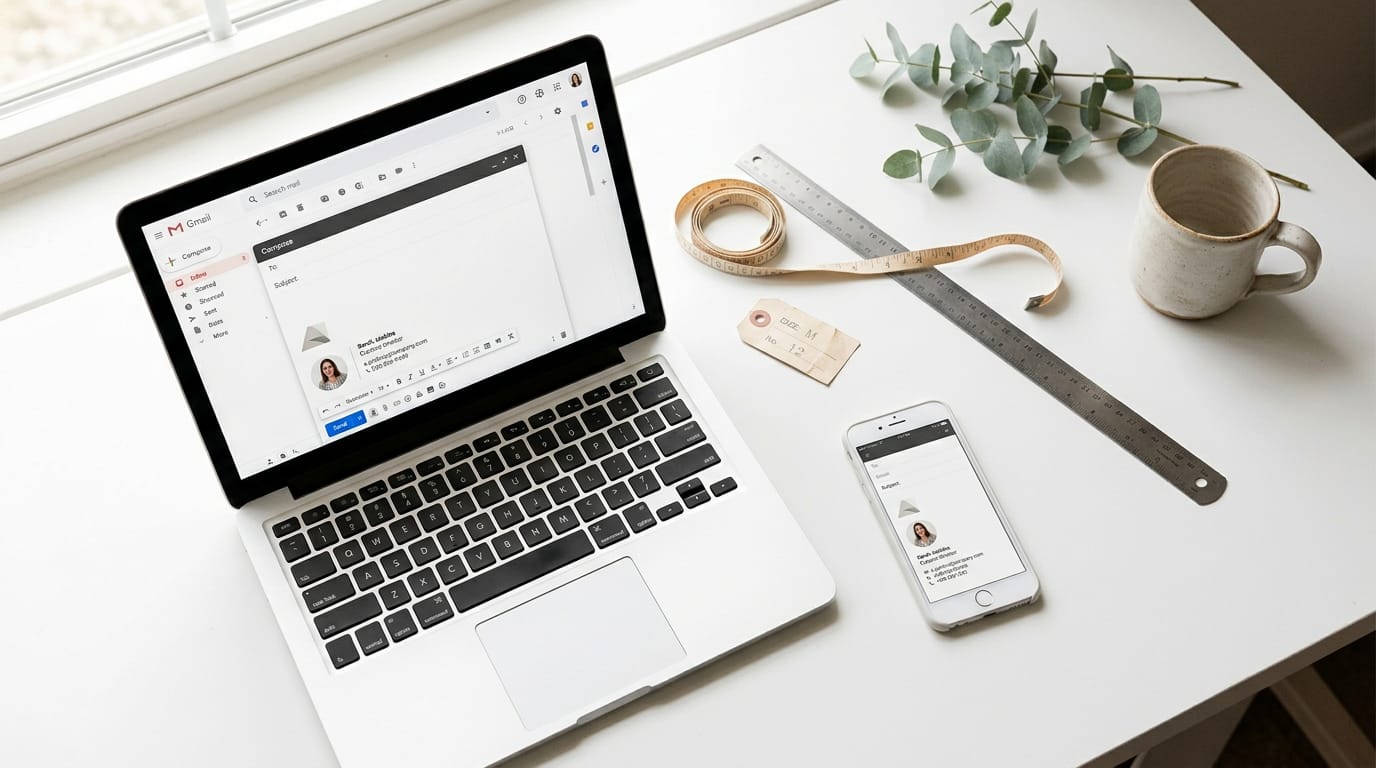
Plain text or image? Plain text is the safe default because it looks the same in every inbox. An image can look sharper, but it may not display for every reader, so keep key details in text. Let the logo add polish, not information. Any image in the signature also depends on email signature size, so check the limits first.
Lay out your sign-off the right way
Good layout comes down to three small habits:
- Add a comma after the sign-off, as in “Warm regards,”.
- Put your name on the line below it.
- Capitalize only the first word: “Warm regards,” not “Warm Regards,”.
Here’s a first email:
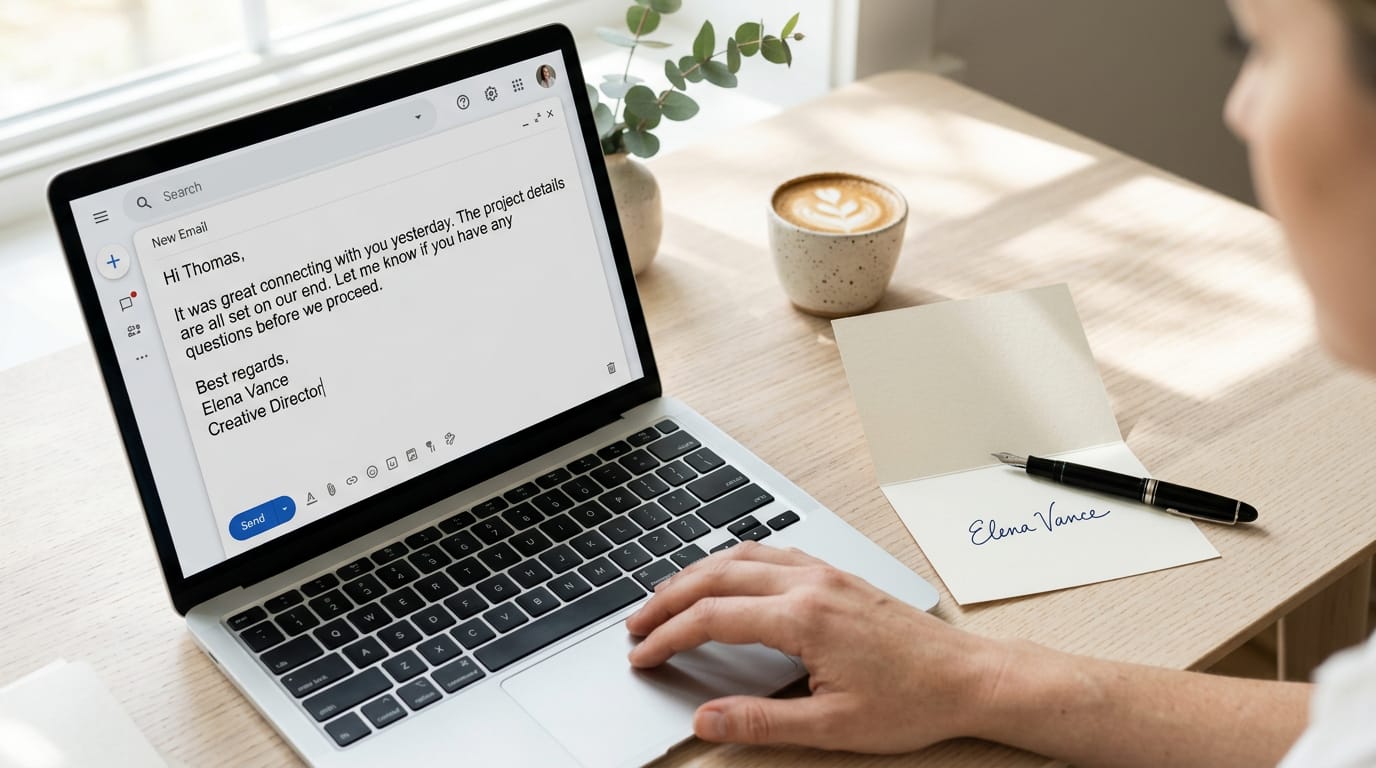
Warm regards,
[Your Name]
[Your Title], [Company]
On a reply:
Thanks,
[Your Name]
Save the full block for a first email, when the reader doesn’t know you yet and needs your details to get in touch. Replies get the short version.
Mistakes to Avoid When Signing Off
A sign-off is small, but it’s the last impression you leave.
Why overly casual sign-offs backfire
Warmth should match the relationship:
- Love, XO, and Hugs: Fine for close friends, awkward for a client you’ve emailed twice. (XO means hugs and kisses.)
- Thx and Rgds: Shorthand for “thanks” and “regards” that reads as rushed.
- Peace out: Slang that can read as dismissive to someone new.
- Slang, emojis, and exclamation marks: Each adds informality, and stacking them makes the email look careless.
A freelance designer who signs off with “Best,” keeps the client focused on her proposal. Aim for clear rather than cute. Simple wins.
Phrases that come across as pushy
- “Thanks in advance”: Assumes they’ll say yes. Try “Thanks for considering this.”
- “Please advise”: Reads like an order. Try “Let me know what works best.”
- “Awaiting your reply”: Adds pressure. Try “Looking forward to hearing from you.”
- “As I already explained”: Signals frustration. Restate the point in one line.
Invite replies rather than demand them.
Other slip-ups and a final check
- Misspelling the recipient’s name: Easy to miss, and readers notice. Double-check the greeting and signature.
- Dated pandemic language: Lockdown-era lines like “stay safe out there” have aged badly.
- “Sent from my phone” footer: Reads as an excuse for typos. Use a signature block with your details.
- Unclear purpose: A warm close can’t rescue a message with no clear ask. End with one next step.
- Humor without shared context: An inside joke can fall flat with a reader who wasn’t there.
Your quick pre-send ending check:
- Is the name spelled correctly?
- Does the email end with one clear ask?
- Does the sign-off fit your relationship?
- Any dated, joke, or pushy lines?
- Does your signature block show your contact details?
The right ending doesn’t have to be fancy. It just needs to fit the moment, the person reading it, and your relationship with them.
A clear closing line, a sign-off that matches your tone, and a signature that shows who you are and how to reach you cover most of what matters.
When you’re unsure, ask who’s reading and what you want them to do next, then choose the simplest ending that fits. The message gets them to the door, but the ending is what they remember on the way out.
Questions
What is a good conclusion for a formal email?
A good formal email conclusion briefly thanks the reader, states the next step or deadline, and leaves room for questions. For example: “Thank you for your time. Please review the attached materials by Friday and let us know if you have any questions.”
What are all the email endings?
There is no single complete list of email endings, but common sign-offs include Best, Best regards, Regards, Sincerely, Thank you, Thanks, All the best, Respectfully, Many thanks, With appreciation, Warm regards, Cordially, Yours sincerely, and Yours faithfully. Casual options include Cheers, Talk soon, See you then, and Take care. Choose one that fits your relationship with the recipient and the formality of the message.
What are the best sign-offs for emails?
Best, Best regards, Regards, and Sincerely are reliable choices for professional emails. Use Thank you or Many thanks when expressing appreciation, and Respectfully for especially formal or sensitive messages. Match the sign-off to the recipient and the tone of the email.
What are good closers for emails?
Good email closers are brief, polite, and clear about what happens next. Try “Looking forward to hearing from you,” “Please let me know if you have any questions,” or “Thank you for your time.” For a request, include the action and deadline the reader needs.
How do I professionally end an email?
End with a concise closing sentence that restates the purpose, makes the next step clear, and includes a deadline when needed. Add a polite sign-off such as “Best regards,” followed by your name; include your title and contact details when the recipient may need them.
How do Gen Z sign-off emails?
Gen Z writers often use short, conversational sign-offs such as “Cheers,” “Talk soon,” and “See you then.” These work best with familiar contacts or peers; with a new or formal contact, choose a more conventional close such as “Best” or “Best regards.”
How to write an email conclusion?
Write one short sentence that wraps up your message, thanks the reader when appropriate, and explains the next step or invites questions. Keep the request specific, including a deadline if there is one, then add a suitable sign-off and your name.
What's a good ending line for an email?
A good ending line is “Looking forward to hearing from you.” If you need the reader to act, make it more specific, such as “Please send your feedback by Friday, and let me know if any questions come up.”